
I’ve wanted to post a review of Focus on the Family’s Restoring Hope book for a while. I submitted an academic review for my marriage counseling course last session. This review starts with an overview of the book and lists its strengths. The second half of this review is a direct excerpt from that paper and covers its weaknesses and suggestions for future developments. Allow me to begin with this preface: While it is tempting to share only the information I feel strongly about, I’m making a sincere effort to be objective, open-minded, and fair. I don’t want to discard either the book’s strengths or weaknesses just because I have strong opinions.
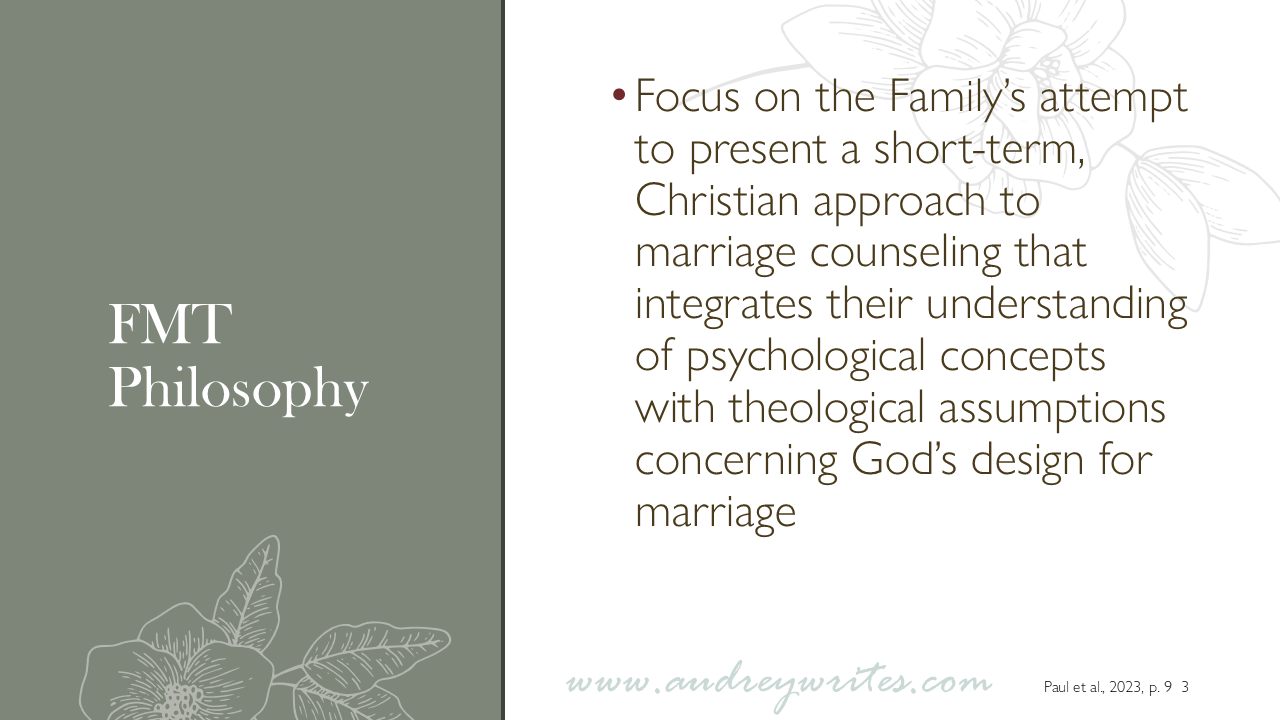
If you haven’t heard of Focus on the Family’s weekend marriage intensives, click here to read about it in their own words. Couples experiencing marital crisis spend 3-5 days working with FMT-trained counselors on their marriage issues. The program appears to cost anywhere from $4,000 to $6,000. The book offers a comprehensive overview of the FMT model, including its background, philosophy, and what it might look like in practice.
Paul et al. (2023), (the authors) claim that most marriage problems arise from unhealthy reactive cycles: one spouse’s fear provokes a behavior that triggers the other, who then reacts in the same way, continuing the cycle. FMT therapists help couples name the cycle and change their reactions and communication patterns to prevent the cycles from recurring.
The authors use language you’d expect in a modern counseling approach, drawing on ideas from popular therapies such as Cognitive Behavioral Therapy, Psychotherapy, and Family Systems. Relying on these evidence-based therapies and citing them in the text indicates that the authors are not anti-psychology but are, in fact, open to implementing concepts that are compatible with their beliefs.
When discussing the philosophy behind the FMT approach, the book says many valuable things about prioritizing each individual’s emotional and physical safety. For example, the book appropriately states, “The presence of abuse dynamics often needs direct referral of spouses for individual therapy before marriage therapy can begin” (Paul et al., 2023, p. 267). The authors also assert that, even in the face of startling statistics on intimate partner violence, some therapists continue counseling as usual and overlook signs of abuse, hoping that “the couple’s progress will eliminate any possible abusive dynamics” (p. 269). The authors recognize that there has been a history of professional counselors challenging Christian counselors for failing to adequately address emotional and physical abuse in marital counseling. Shortly after this statement, they argue that when abuse is present, it must be addressed, even at the risk of “the therapeutic alliance being sought with a couple” (p. 271). They also appropriately stress that “recognizing patterns of abuse in marital relationships could not be overemphasized or more critical,” adding that “adept, competent, and appropriate recognition and response to abuse dynamics in marriage could literally be a lifesaving intervention” (p. 271).
I don’t point this out lightly. Other “biblical” approaches completely oppose integrating any form of psychological science into their practice. This is a giant step in the right direction! In my opinion, it’s one of the most important steps. I’ve observed that historically, we (Christians) tend to swing in the opposite direction when it comes to any kind of cultural shift. Oftentimes, we swing way too far in our attempt to overcorrect. Then we tend to backpedal to where we probably should have landed in the first place. It is refreshing to read about others’ willingness to treat faith and science as compatible. The authors of Restoring Hope take emotional processing seriously. They do not automatically treat emotions as an enemy of faith.
Shifting from a Bible-only perspective to accepting other evidence requires a great deal of humility, and I want to respect that. For some, that means being open to the possibility that the Bible is still true, authoritative, and good, but that their interpretation has fallen short. I’ve been there. It’s not always easy. Sometimes we have to deconstruct our beliefs to rebuild them, and for many, it feels like war. Other times, it feels like you’re putting together something from IKEA or some complex LEGO set, only to find extra pieces you weren’t supposed to have left over. What do we do with the extra pieces? Do we keep showing others our way of building according to God’s design when we know there’s more out there that we’re missing, or do we go back to square one and try again?
This is a huge piece of the puzzle that’s missing from how we “do” church, and we can learn from it if we stay teachable. When we are challenged by new information, new science, new data, new perspectives, etc., are we willing to take a moment, step back, and acknowledge that we don’t have all the answers, but are still charged with seeking them out? If this stretches you (like it does me), our definition of humility could use a workout. It’s time to put on our shoes of peace and start stretching down to reach our toes, especially if it’s been a while since we’ve seen them! If the body of Christ all functions differently, then even our big toe’s perspective should matter.
It also takes humility to recognize that just because one method worked for one person doesn’t mean that it should fit everyone else. The authors correctly acknowledge that no one counseling model works for everyone (p. 233). They explain that many factors come into play when counselors work with couples to develop a treatment plan, set goals, and create a plan to achieve them. Counselors or therapists trained in FMT are encouraged to help clients process their emotions, reflect on their experiences, and improve their communication skills with greater self-awareness. This is especially true when they refer to “Care Cycles” and “Heart Talk” (pp. 242-243).
Another strength worth noting is how intentional the therapists using FMT are in reducing blame and shame when they are working with couples through their issues. Rather than simply telling the couple what is wrong, counselors are encouraged to approach clients with curiosity and compassion, emphasizing listening. FMT counselors are instructed to welcome disagreements and questions and make space for reflection (pp. 248-249). The authors explain that feeling safe “opens the door for intimate connection” and that making space for spouses to be real and vulnerable with each other often reveals the deeper issues they need to work on (p. 237). They also include sections addressing self-care, boundaries, and individual responsibility.
I remember several times hearing well-intentioned pastors and counselors advise people to simply stop feeling or thinking a certain way, without giving them room to process what might actually be the problem. Without the right tools or enough space, people may believe they are the problem, and that’s a burden the good Lord never intended them to carry. People have problems, but they are certainly not “the” problem—unless, of course, their behavior actually is. That’s where the therapeutic waters get muddy, and a little insight into clinical models can become disastrous, especially when the counselor’s agenda overrides goals that might be best for the couple. Before we jump in headfirst, let me introduce you to Restoring Hope’s couples.
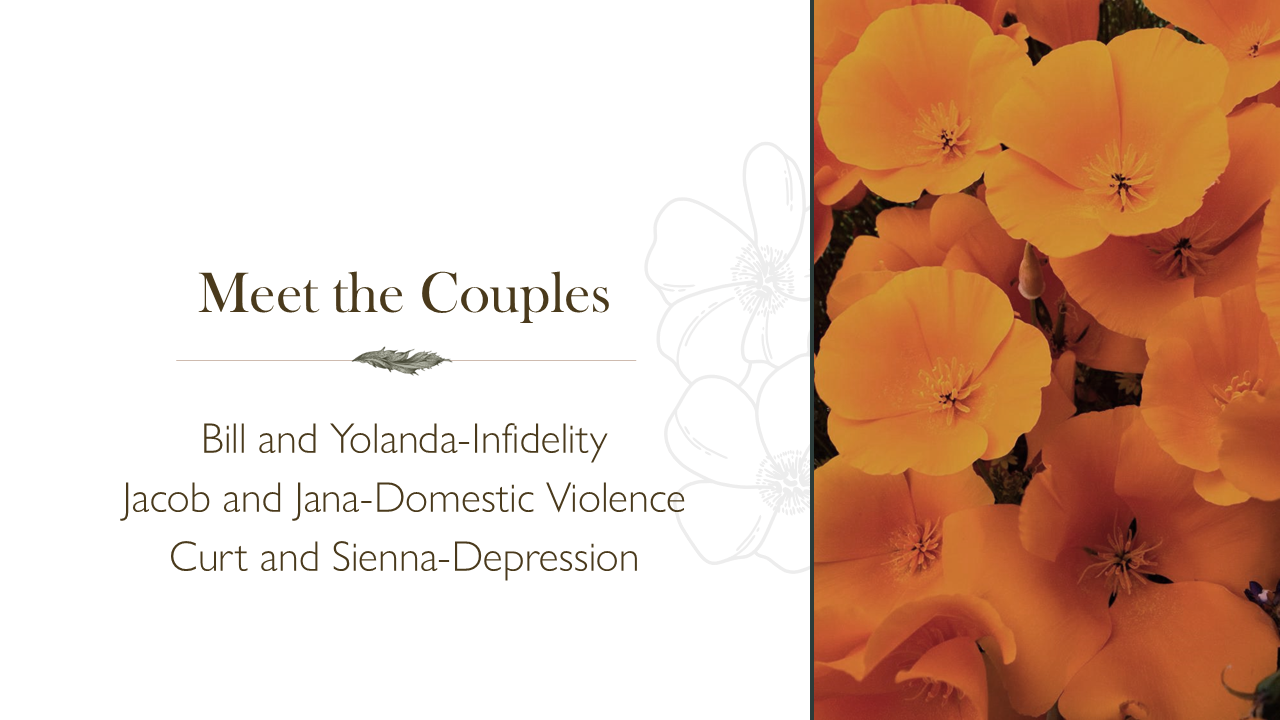
The book introduces these three couples in its opening chapters. Their progress in therapy, along with their interactions with their therapist, is worth discussing. After Bill’s affair, he and Yolanda seek counseling to save their marriage. Yolanda is deeply hurt, does not feel safe or secure in their relationship, and feels uncomfortable discussing such personal problems with people outside her immediate family.
Jacob and Jana disclose a history of physical and emotional abuse and have already sought professional counseling. Their fights have escalated in the past to the point that neighbors called the police because they were concerned for their safety. Before they were admitted to the program, they also said their counselor had advised them to pursue individual counseling before trying to work on their marriage.
New parents Curt and Sienna are seeking help for issues related to Sienna’s postpartum depression. So, what does FMT look like in real-life situations? This is where I found myself scratching my head in disbelief. Despite the promising FMT philosophies, a large gap still appears between theory and practice. As we move on to our discussion of the book’s weaknesses and limitations, keep the following questions in the back of your mind to percolate.
What does the FMT initial screening process involve when selecting couples who apply to attend one of their marriage intensives? Are FMT counselors equipped to provide services for individuals who require specialized treatment? What does that referral process look like? What situations are FMT counselors unwilling to work with? How do they handle personal responsibility when both spouses do not share the presenting issue equally? How do the FMT therapists respect each individual’s autonomy? How do they measure and report therapy success? Where do their numbers come from? Can the authors claim their approach is evidence-based simply by citing the success of ideas from other psychological models they borrowed as support for their model?
The next italicized section is an excerpt from the paper I wrote for the class book review.
Lack of Distinguishing Characteristics for Safety Criteria
One of the book’s most problematic issues is how the authors distinguish between normal distress and severe distress that requires referral to specialized care providers when issues exceed the scope of the therapist’s training. Without an explicitly described list specifying conditions that would warrant a referral or require individualized treatment, such as addiction, abuse, suicidality, and personality disorders, all couples admitted to the program begin conjoint therapy with the same approach.
Consequently, the text raises several safety and responsibility concerns. Although the authors go to great lengths to describe how to navigate counseling relationships in cases involving abuse, their explanations do not appear to include all the criteria used to determine whether conjoint therapy is appropriate. As a result, the screening process appears blatantly inadequate. This shortcoming is particularly evident in the illustrative case vignettes.
For example, Jacob and Jana exhibit obvious signs of interpersonal violence being present in their relationship and even disclose prior recommendations from a former therapist to seek individual counseling. Yet, they are still admitted for treatment into the FMT marriage intensive program. This is especially problematic because the text does not list the criteria couples must meet to be considered for inclusion. The text shows that at least one FMT therapist recognized that couples therapy would still be appropriate for Jacob and Jana. However, it does not explain how therapists prioritized each spouse’s “personal safety of each spouse,” attended to their safety, or handled the procedures and referrals at the end of their sessions (Paul et al., 2023, p. 274).
From the couple’s introduction, Jacob and Jana are described as having “chronic disagreements,” with “yelling and verbal abuse” present (Paul et al., 2023, p. 21). These abusive dynamics were disclosed to the FMT intake team as having escalated so much that neighbors had called the police, fearing that someone was being hurt. The authors explain that the couple did not begin FMT until they were enrolled in “marital therapy with a local therapist” (Paul et al., 2023, p. 22).
After consulting with their therapist and obtaining permission, readers learn that abusive dynamics were still very much an issue and that Jacob and Jana had gone to have individual evaluations with a psychologist. Before continuing their sessions, the marriage counselor stated she was waiting for their results and recommendations on whether individual therapy should be pursued before any additional marital counseling would take place.
Despite these recommendations, those responsible for FMT intake proceeded regardless and interviewed Jacob and Jana. Even during the interview, the couple exhibited so much distress that they needed a ten-minute break. When the counselor asked about their arguing, the couple “laughed and affirmed their behavior was mild compared to what happened at home” (Paul et al., 2023, p. 22). When the counselor labeled their behavior “extreme” and “a possible primary reason for their difficulty,” the couple was “stunned,” believing their behavior was normal (Paul et al., 2023, pp. 22-23). Despite these red flags, FMT still admitted them to the program, apparently dismissing their local counselor’s recommendations and the psychologist’s evaluation.
This scenario prompts readers to ask questions such as: Did the therapist prioritize each individual’s safety in this example? How did FMT therapists prioritize the children’s individual safety if they did not immediately recommend separation and individual counseling? How are FMT therapists trained to navigate these issues while upholding the values emphasized in their therapeutic model, when, in practice, their descriptions of the model fall so far short of their claims about safety? Further, could FMT’s view of the nuclear family and marriage as the cornerstone of a healthy society overlook the individual’s contribution?
Theological Assumptions
Next, several issues in the book raise concerns about its theological assumptions and how they influence the therapeutic process. More inconsistencies with the FMT model become evident in how the book presents Bill and Yolanda’s case. As a mixed-race couple, one would reasonably expect the book to mention an integrative counseling approach to demonstrate greater cultural competence. Such an approach would ensure that the therapist considers both spouses’ perspectives, cultural backgrounds, beliefs, and experiences.
Multicultural Appropriateness
In Bill and Yolanda’s example, the counselor’s actions and remarks do not indicate what the intervention was clinically intended to demonstrate, and they could be interpreted as revealing a lack of training in cross-cultural methods, trauma-informed care, and other ethical considerations. First, Yolanda discloses that “People don’t discuss their problems with strangers where I come from,” and is then described as being “terrified” about being in a group (Paul et al., 2023, p. 20). However, because she did not feel safe in her relationship with Bill, she was willing to risk it.
Outworkings of FMT with Infidelity
Because of the structure of the Reaction Cycle, most emotions perceived as negative are characterized as fear or anger. Rather than hearing Yolanda’s descriptions of her experience and then validating her feelings about the infidelity, the counselor does not address the concerns threatening Yolanda’s sense of safety in the relationship. Instead, when Yolanda shares her feelings, the therapist moves the conversation along to discuss issues like self-care and boundaries before dealing with infidelity, as if that is a normal marriage problem warranting the same treatment as forgetting to put the lid back on the toothpaste.
Mislabeling Emotions
Rather than letting the Holy Spirit lead the conversation, the counselor stepped in to ensure they agreed to preserve the marriage covenant before they even discussed Bill breaking it. This evidence does not support FMT’s claim that it prioritizes the individual first. Further evidence is shown in how Yolanda’s hypervigilance was mislabeled as maladaptive rather than natural, understandable, and even healthy. In short, the therapist did not appear to prioritize Yolanda’s need to feel emotionally safe. These examples lead readers to ask whether FMT therapists help clients express and understand their lived experiences or are trained to interpret them through a narrow lens, without research supporting its use with individuals from diverse backgrounds.
Consider what happens when she tearfully explains her hurt, saying she “wouldn’t have even known about the affair if that woman hadn’t called” her (Paul et al., 2023, p. 63). Rather than asking Yolanda to continue and describe how that made her feel, the counselor asks Bill, “What emotion did you hear in what Yolanda was expressing a moment ago?” (Paul et al., 2023, p. 64). Rather than allowing Yolanda the respect and dignity to frame her experience, the counselor and Bill carry on a lengthy discussion of her anger right in front of her. In fact, Yolanda never agreed with their assessment that she was experiencing anger. Instead, the therapist helped Bill set healthy boundaries by first asking Yolanda to use a softer tone. However, the therapist may be misreading their relational dynamics and failing to distinguish boundaries from manipulation in this case.
Accountability
In some biblical counseling models, counselors often appear to overemphasize sin, resulting in individuals experiencing shame and assigning blame. Perhaps FMT counselors have let the pendulum swing too far in the other direction, risking a failure to hold individuals accountable for legitimate harm. In the case representations, the FMT framework appears misapplied in situations involving infidelity, where one spouse clearly violated the marriage contract and would naturally need to take responsibility for their actions, recognizing that they are largely responsible for accommodating the needs of the wounded spouse so that the wounded spouse can feel safe and begin to trust again.
Validation, Boundaries, and Trust
Determining responsibility in these circumstances is not merely about assigning blame but about validating one partner’s warranted fears and concerns while ensuring the initially offending partner is ready and willing to do what is necessary to rebuild that broken trust. The authors may benefit from exploring Solution-Focused therapy and recommending that therapists hold space for mercy and justice so forgiveness is not weaponized against the other spouse. FMT therapists may find the work of the theorist Ivan Boszormenyi-Nagy, who argued that restoring justice is integral to restoring relationships and rebuilding attachment, insightful.
It appears Yolanda receives significant attention from the FMT therapist to ensure her emotional response is not too much. Furthermore, the therapist neither disagrees with nor comments on Bill’s request that she be less disrespectful. It is reasonable to believe spouses can share responsibility for developing solutions and rebuilding attachment, but that does not mean that one should take responsibility for the other’s actions, especially when one directly violates the marital covenant. Unfortunately, the counselor’s framework in the case illustrations prematurely encourages clients to categorize their emotions as equally contributing to a reciprocal cycle.
Narrowed Lens for Reactive Cycle
Focusing on a single reciprocal reaction cycle seems too narrow to meet clients’ varied needs. In relationships, other legitimate feelings may influence clients’ outward emotional responses. For example, when one spouse has seriously violated the other, their reaction, like Yolanda’s, may be entirely appropriate, especially if the wound is still fresh. In that case, one spouse may not be triggered, but may be responding to a present threat, which might cause them to withdraw and keep a safe distance until the person who broke their trust earns it back.
A person’s initial response may also be authentic, not an overreaction. Requiring someone to change their tone of voice or stop crying in what should be a safe space before they are heard does not communicate respect, nor does it validate the offended spouse’s lived experience. Allowing space for individuals to express their genuine emotions and concerns does not suggest that the offending party is the problem. Instead, it aligns with the concept. In these cases, FMT therapists would benefit from recognizing that both parties can take responsibility for addressing the problem without necessarily taking responsibility for causing it.
Gaps in Theory and Practice
The book includes several instances of troubling behavior that call for clinical intervention, including manipulation, control, intimidation, threats, aggression, and physical violence. The therapist addresses these behaviors but continues treatment as though the couple was dealing with ordinary relationship conflict. A stark contrast exists between the authors’ definitions and examples in the book’s final section and the therapist’s approach to counseling the three case couples. This review clearly shows, with evidence, that large gaps exist between what FMT teaches and what it does in practice. The FMT therapist does not appear to follow the methodology section’s descriptions when the situation requires more cultural competence and a trauma-informed understanding and response.
Dual Role of FMT Therapist
One potential problem in the Hope Restored framework concerns the marriage counselor’s dual role as both therapist and theological authority (Paul et al., 2023, pp. 62-76, 190-191, 283-299). If one spouse disagrees with the therapist’s interpretation of the Bible, that spouse may be seen not only as disobedient to the Lord’s teachings but also as resistant to the therapeutic process. Without a clearly defined list of theological claims, it would be difficult to discern whether the counselor is acting on theological assumptions when their recommendations conflict with a trauma-informed assessment and the client’s decisions about forgiveness, reconciliation, and even divorce.
Spiritual Coercion
Given the conversation examples described in the text, it would be hard to imagine feeling more valued as an individual than their marriage. Consider how therapists are instructed to respond to individuals who may not yet be ready for reconciliation, or to those who believe it is in their best interest to divorce. FMT therapists ask clients the Solution-Focused Brief Therapy miracle question. Arguably, the version FMT developed, with wording similar to the “miracle question,” may be perceived as spiritually coercive. Clients are asked not what the first signs of the problem being gone would be, but whether they would accept it if God performed a miracle in their marriage, or whether they are determined to walk away regardless.
The tension between a client-centered model and the Hope Restored model lies in their different purposes. The SFBT miracle question allows the client to envision change and develop goals. For FMT, the miracle question is used in the couple’s initial screening to determine eligibility by assessing their commitment to trusting God to save their marriage. This could be problematic if a client felt pressured to respond with an immediate yes-or-no answer. It is possible that the therapist may assume that any resistance to therapy implies spiritual failure if an individual believed that leaving a marriage may very well be God’s intended miracle for that person. Readers may then reasonably ask, “Who gets to determine what God’s miracle answer is?”
Therapists who declare, “God clearly says…” while teaching culturally specific responses shaped by their theological assumptions may not recognize that this counsel may be interpreted as coercive, stemming from power dynamics tied to their authoritative position. To counsel married couples well, therapists must adamantly pursue humility and the guidance of the Holy Spirit, especially when biblical interpretive issues arise. Explanations such as these highlight the inconsistencies between FMT’s claims of prioritizing the individual and its claims of saving marriages. Moreover, the question’s function in a spiritually integrative, therapeutic setting requires further explanation.
Empirical Research Support
It is equally important to address several substantial weaknesses in the authors’ research claims. First, the authors present FMT as the product of over twenty-five years of experience and the influence of a diverse group of Christian individuals and professionals associated with FMI (Focus Marriage Institute). Yet, they then present it as a newly designed approach to integrated therapy (Paul et al., 2023, pp. 317-318). Although the authors make several empirical research claims, the evidence they present raises several questions. When describing FMT’s background, success rates from psychological theories such as CBT and Family Systems Therapy, which have been shown effective in individual counseling, are incorporated into the integrated FMT model. However, it is unreasonable to apply only parts of a psychological construct and claim effectiveness, especially when the models are being integrated in a completely different counseling context (Paul et al., 2023, pp. 329-335).
Another issue with the book’s research claims appears in the 2011 study the text frequently cites. Its abstract reports that “At 12 months, 94.6% of individuals who responded to follow-up survey were still married and at 24 months 84.5% of respondents were still married” (Burbee et al., 2011). Readers may not immediately notice a potential catch in how the research is presented. Further investigation of the 2011 report finds that 1,043 (mostly Caucasian Protestant Christian) couples attended the Hope Restored Intensive during the study period. However, only 359 couples responded to the follow-up survey. Only 71 couples provided a follow-up report at 24 months, indicating potential attrition bias (Burbee et al., 2011).
Recommendations:
In the 2011 study, the authors acknowledge that respondents to the follow-up surveys may have been more motivated to respond than nonrespondents (Burbee et al., 2011). Replicating the study would be difficult, given its parameters and the insufficient data for long-term comparisons using the Quality of Marriage Index. Another area for investigation is how participants reported their successes. Are the reported follow-up responses based on unreliable subjective accounts of how participants felt the intervention affected their marriage, or on an established, measurable tool such as the Beck Depression Inventory? (There are other inventories that measure relationship satisfaction that are available!)
Screening Charts, Intake Forms, and Standardized Procedures
The Restoring Hope framework would greatly benefit from including comprehensive screening for coercive control and intimate partner violence at intake. This would help therapists better understand reaction cycles, decide whether to ascribe causal effects to both partners, and assign responsibility for managing conflict while planning therapy goals. Reexamining the therapist’s actions and remarks through a trauma-informed lens can not only improve assessment and intervention but also better reflect the therapeutic process built into the described FMT framework.
Establishing predetermined criteria for individual therapy referrals, separation when safety issues arise, and referrals to specialized care would greatly improve the program. Simply saying that a reunification plan must be “crystal clear” falls short in a framework that repeatedly insists it prioritizes individuals’ safety over the institution of marriage (Paul et al., 2023, p. 190). Additionally, outlining a plan for individuals to move forward regardless of their marital outcome would reinforce their claim that they value the individuals.
Specified Disclosures for Consent
It would also help the program if the therapist disclosed specific theological statements about what they believe is God’s design for marriage and included them in the couple’s informed consent process. Including a list of recommended care options and resources would also be beneficial. A more culturally competent, trauma-informed integration into the FMT model would reevaluate boundaries, potential reconciliation, referrals, temporary separations, and even the possibility of divorce as topics that can be discussed freely and not considered taboo. Additionally, when planning goals, therapists may want to consider what spiritual and emotional growth may look like for each individual and for the couple together as they are conformed into the image of Christ.
Required Training and Clear Roles
Therapists would also benefit from specialized training in integrating interpretative humility, especially in cross-cultural settings. When two therapists are in the room, listing each therapist’s role, purpose, training, and expectations would help. The authors should reconsider how they describe therapist interactions in their case vignettes.
Conclusion
In conclusion, the FMT approach has several notable strengths but also suffers from many weaknesses. This review finds the approach especially problematic for couples who do not share specific interpretations of the biblical text, those from different cultures, those with trauma experiences, and those with other neurodivergences.
This model credits FMT with taking the marriage covenant seriously and integrating psychological concepts into biblical counseling. Unfortunately, it lacks sufficient guidance for providing evidence-based, trauma-informed care, addressing abuse dynamics, and defining restoration more broadly than simply avoiding divorce. These shortcomings prevent the review from recommending the FMT model for use as a clinical intervention. However, the book is a helpful resource for understanding the model itself.
As a result, this review recommends that pastoral counselors seeking to minister to a more diverse group of married Christian couples would benefit from an approach where the therapist humbly submits to the leadership of the Holy Spirit, the teachings of Christ, recognizes the principles of Scripture, prioritizes an individual’s safety, agency, and personal responsibility, considers an individual’s physiological responses, the effects of trauma, and leans on helpful psychological theories and methods toward greater holistic emotional health and spirituality for individuals, married couples, their families, and the communities they live in.
I’d like to conclude this post slightly differently from my class paper’s review. I want to highlight a few additional thoughts. Let’s return to our couples. I didn’t get to talk about Curt and Sienna much in my review, and they deserve more attention. If you followed along with the most recent Lindsay Clancy trial, you know that postpartum depression is a real, clinical condition. What is unfortunate for this couple is that depression is identified, but it is unclear how it is treated separately from their marriage issues, or if it is at all. Instead, the therapist explicitly states that a reactive cycle rooted in past hurt is likely at the root of all of their marriage issues (p. 248). How therapeutic (or accurate) is it for this couple to work on a perceived reaction cycle with behavior modification when there is a clinical mood disorder that seems to be going untreated? How are these FMT therapists coordinating care with other professionals? In Curt and Sienna’s case, they don’t.
Jacob and Jana’s story offers some insight into how the FMT therapists might work with clinical professionals. This couple allowed the program’s intake assessors to contact their marriage therapist to ask about their progress. Their initial intake was delayed until they had begun treatment with a therapist. The therapist explained that they had stopped being outwardly abusive toward one another, but both still struggled with reactive and controlling behavior. They had also both undergone psychological assessments, but the therapist had not received the results when they were contacted. With this information, FMT therapists determined it was safe enough to admit them for intensive treatment.
This begs the question, “How does FMT define safety?” What does it mean to have abusive behavior under control? Are there clinical criteria listed somewhere when conducting assessments? And, I cannot help but wonder, why wouldn’t they wait until the therapist received the results of their psych tests? If that therapist didn’t want to proceed with treatment until they had the results and potentially gotten individual treatment, what makes FMT therapists feel like they have enough qualifications to dismiss a licensed clinical counselor or psychologist’s decision for the couple to put their therapy on hold until then? Although I’m relieved to see that contact was made, when the therapists noticed that the couple’s reactive behavior was not actually under control, why did they proceed with treatment? (see pages 22 and 271-275)
The authors also do not adequately address how their relationship dynamics are affecting the children in their household. Do the FMT theological convictions about saving the couple’s marriage influence whether they believe doing so will ensure a safe environment once the couple returns home? Do their beliefs about preserving marriage no matter what align with what would be best for the children in that home? The authors are very meticulous in expressing their concern for safety, but they do not adequately address when divorce could be the safest option. It seems that any mention of divorce is seen as a sign of a lack of faith in God’s ability to perform a miracle.
Without adequate training in abusive relational dynamics, FMT therapists may automatically assume that reactionary cycles drive all of the couple’s problems. This is dangerous because it could reinforce—or even arm—abusive behaviors that may already be present in the relationship, allowing forgiveness to be weaponized and the victim to be blamed for problems they did not cause. How many times do we hear about spouses who blame themselves for not having enough faith to change their spouse? Sure, the text doesn’t say it quite like that, but that’s often the takeaway from teachings that idolize marriage over the individual’s safety. The therapists may not intentionally be causing these damages, but these are damages that are continually reported by survivors who have shared similar stories. Their stories are evidence that we need to do better.
What happens when counseling models borrow terms and approaches from clinical models without fully embracing the definitions and boundaries that should come with them? What happens when marriage counselors misread situations and falsely label “root” issues? What happens when individuals come in who are on the autism spectrum and speak with a tone they feel indicates complacency? How do they work with individuals with mood disorders? There were several times when I was reading the therapist’s interactions with the couples that I felt like I wanted to throw the book at the wall because I felt the therapist was being played. What happens when reconciliation is rushed? Too many issues come into play, raising significant concerns about FMT’s “integrative” approach.
I long to see a healthy integrative approach extend to pastoral counselors who desire to work alongside clinical professionals to support an individual’s spiritual goals. I long to see a curriculum that considers all the parts of a person’s being when they seek help or guidance. Biological, psychological, sociological, emotional, and spiritual factors influence a person’s overall wellness. I don’t feel like it’s too far off. What are your thoughts? I’d love to hear them!


