
If you haven’t heard the latest from the SBC (Southern Baptist Convention), the world’s largest Baptist organization, they’ve officially voted to reaffirm their ban on women serving as pastors in their denomination. This has led to a remarkable increase in posts supporting women in ministry flooding my newsfeed.
While the Assemblies of God‘s official stance supports women in all ministerial roles, some of its churches, influenced by fundamentalist views like those of the SBC, do not yet reflect this. Some AG churches support egalitarian beliefs in ministry, but maintain complementarian views at home, with distinct (“separate, but equal”) gender roles. But, they’ve been working on it! In recent years, the AG has made increasing efforts to promote the acceptance of women serving at all levels of ministry, as evidenced by several books, magazine articles, interviews, and updates to its position papers. Just last month, the Indiana District invited Donna Barrett, the former General Council secretary, to be its keynote speaker. In one of her sessions, she discussed men and women ministering alongside one another, promoting the egalitarian position.
As a credentialed woman living in the heart of the nation’s Bible Belt, I feel compelled to share some of my thoughts. Hearing others’ perspectives on their life experiences helps us better understand the unique challenges each of us faces, leading us to feel deeper compassion for one another and to experience greater unity in the body of Christ.
I spent years deconstructing restrictive theology concerning gender before I could confidently pursue my ministry credentials. I feel like I’ve become close friends with the arguments associated with women serving in ministry. That said, please hear me out: We can try to persuade people sitting on the fence by stating our position affirming women in ministry until we’re blue in the face and the cows come home. Still, until we address the underlying theological currents that promote complementarianism in our churches, some holy heifers just won’t budge.

What are the underlying theological currents driving the complementarian position in our churches? The three I struggled with the most concern how we read Scripture (hermeneutics), our views on the end times (eschatology), and headship theology as it relates to the imputation of sin. Inevitably, our approach to these sacred cows shapes our conclusions about gender roles. Both complementarian and egalitarian believers may initially seem to agree on these topics, but how a topic is defined and the questions we bring to the Scripture lead to different conclusions.
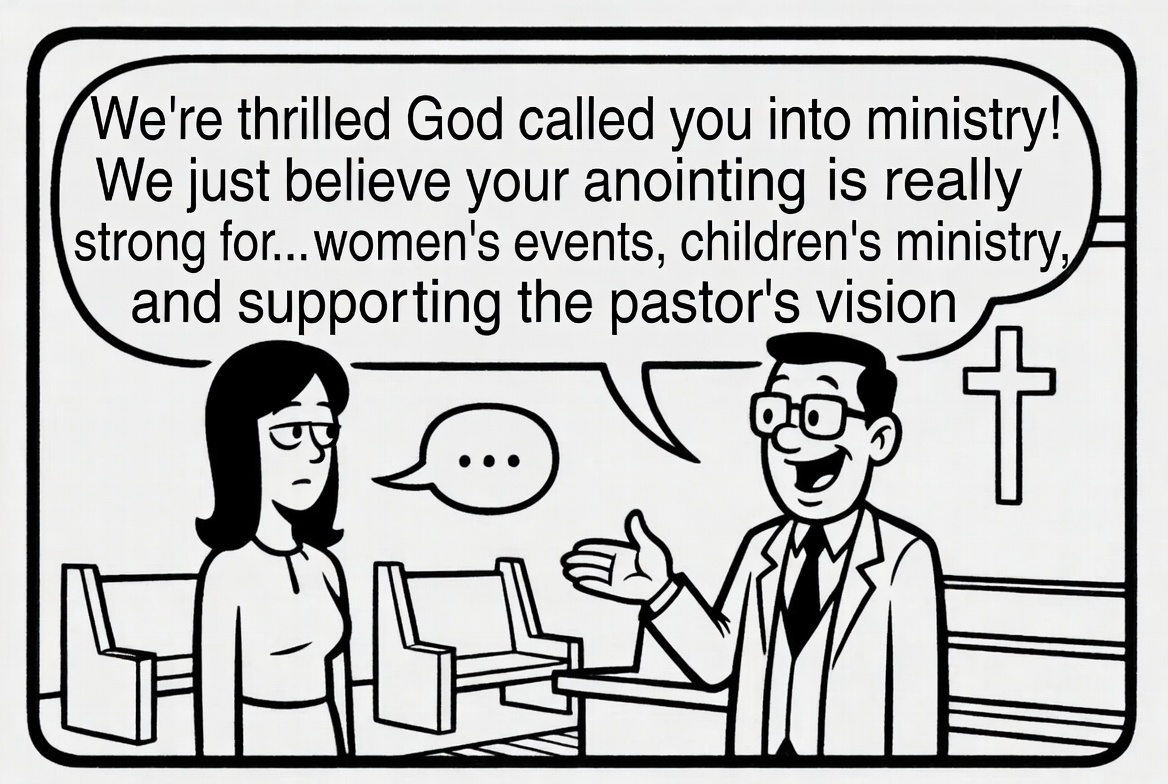
Holy Cow #1: How We Read Scripture
The first fundamental agreed upon by churches affiliated with the Assemblies of God concerns Scripture. It reads: “The Scriptures, both the Old and New Testaments, are verbally inspired of God and are the revelation of God to man, the infallible, authoritative rule of faith and conduct (2 Timothy 3:15–17; 1 Thessalonians 2:13; 2 Peter 1:21).” It sounds remarkably similar to other denominations’ beliefs about Scripture in their statements of faith. However, there are various theories about inspiration and the Holy Spirit’s role in Scriptural interpretation.
When approaching the Bible, there are several important aspects to consider. These include:
1. Understanding how the Spirit inspired the text—whether the words were guided or directly dictated by the Holy Spirit.
2. Examining the application and extent of the Bible’s authority.
3. Discernment between which parts of the text are prescriptive (commands to be followed) and which are descriptive (simply describing events or practices).
4. Recognizing the different genres of writing within the Bible and how they should influence interpretation.
5. Considering how the original recipients of the message may have understood it, paying special attention to their cultural and historical contexts.
Taking these factors into account can lead to a deeper and more accurate understanding of the Scriptures.
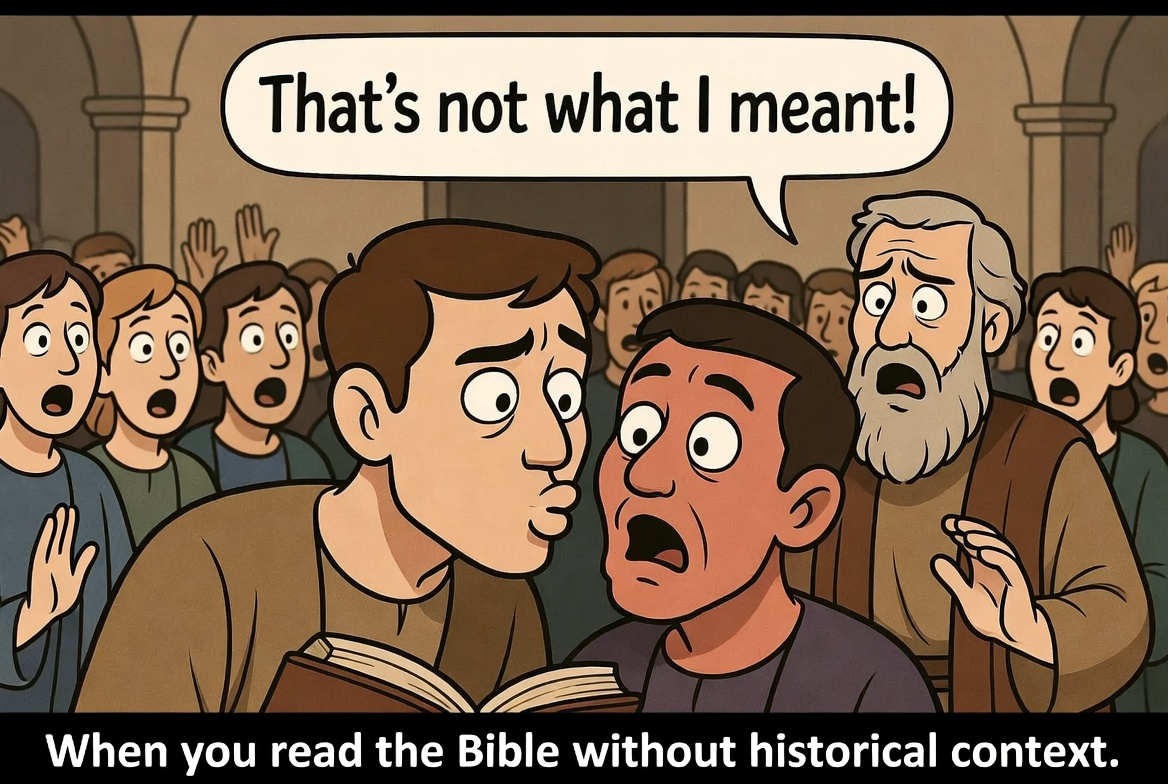
Professor N.T. Wright shares his insight on how the inerrancy of Scripture is generally accepted or promoted in this recent podcast. I like how he addresses the ways the Enlightenment and the Protestant Reformation influenced the way we rationalize truth and approach the Bible. He warns against the dangers of approaching the Scripture as a sort of “paper pope,” in which one can go to the Scriptures without having to think about the answer. Someone approaching the text with “What does this Scripture mean to me?” without first attempting to understand it as originally intended within its historical context may end up claiming that their interpretation is inerrant.
This does not mean we should avoid reading the Bible! No, it means we should engage with and study it all the more! I used to find it challenging to understand why preachers referred to both the Bible and Jesus as the Word of God. As someone who was not familiar with Christian terminology, it seemed like well-meaning Christians were treating the Bible and their interpretations as if they were the same. This was confusing because some passages appeared clear in their immediate context but became less clear when I considered the broader historical context.
I also used to naively think that all Christians believed the same things. One of the first distinctions I recognized between Christian groups was that some were cessationist (like many/possibly most in the SBC) and others (like my tongue-talking Pentecostal group) were continuationist. I hate to oversimplify the distinctions out of respect for them, but for the purposes of this blog, I’ll link to further explanations and summarize them anyway.
Continuationists expect the ongoing operation of all spiritual gifts and fresh, Spirit-led insights that point back to Christ under the authority of Scripture. In contrast, cessationists believe that supernatural sign gifts ceased with the early church, holding that God’s definitive revelation is complete in the Bible, which the Holy Spirit continually illuminates for believers today.
I can’t count how many times I’ve felt gaslit by the phrase “The Bible clearly says…” Hearing anyone say it now immediately puts me on the defensive. Scripture is a sacred text, but it still requires human interpretation. Its words can bring life or death depending on how someone uses them. Sometimes, our words (or tongues) speak lies and deceit, thereby weaponizing the word in ways it was never meant to, leading to harm and even death. Our tongues can function like swords, or we can beat them into plowshares and pierce the darkness.
The Scriptures are only rightly considered the words of God when they are used to reveal the Word made flesh, Jesus. He showed us the Father, included all people in His new covenant, a new message, and new tongues, as the Final Word. (Fun fact: He was also the first!)
The Gospel really is good news for all people and all tongues. His inclusive work silences the mouths of those who used His words to bring death, and it still does, but we need ears to listen. The Word of God, Jesus, the Messiah, is the fulfillment of the promise to the Israelites. The New Testament recounts how Jesus fulfilled promises by describing how those whose tongues were thirsty, mute, and even those who stammered were healed, set free, and ultimately found rest for their souls.
Let’s consider the functions of the many gifts of tongues in the book of Acts. When we agree with the Word of God with our words/tongues, our breath joins His, making Him known to those around us today. If every tongue is to declare His works, then no tongue, speaking in love and edification, should be restricted or silenced when gifted with the knowledge and ability to speak the truth of Christ, as revealed in the Scriptures.
It is easy for religious leaders to gain power, emphasizing biblical authority and leadership, then gain access to resources God wants to provide to the hungry and thirsty, only to lock them away for themselves. The Pharisees and Sadducees could have fed the hungry with the bread of life, but they didn’t. The Lord took issue with leaders misrepresenting Him then, and He still opposes it today. The Lord’s tongue is described in Scripture as a consuming fire, burning up all that is not eternal and all that can be shaken. Passages like this one describe God’s word being on someone’s tongue. The Lord reveals Himself to people; this revelation has been recorded for us in the Holy Bible, all of it pointing to the God-man, Jesus Christ.
We are to show ourselves approved and exercise discernment when judging the teachings of those claiming authority as teachers and leaders in the Church. Understanding this first makes it easier to see why certain people were silenced in the New Testament. I can’t help but notice how the examples we are given in the Scriptures consistently show us that tongues were silenced not because they were female, slave, or Gentile, but because certain individuals were unlearned, not yet mature enough to take on a leadership role, or they were blaspheming the Spirit by shutting people out of the kingdom and taking His name in vain by saying something is his word when it is not.
Jesus silenced the Sadducees, and the disciples called people out, especially those of the circumcision group. 1 Peter reads that it is “God’s will that by doing good you should silence the ignorant talk of foolish people. Jesus warned the disciples of the yeast of the Pharisees and Sadducees’ teaching. He rebuked the teachers of the law for being hypocrites who “shut the door of the kingdom of heaven in people’s faces.” How we approach the Scriptures matters. The Scriptures are our plumb line, and when we approach them, we need to study them through a Christological lens by the Spirit. That means that when we read the Bible as the Word, we do so in light of the cross.
I’m convinced that Jesus is alive, that His Spirit still moves today, and that understanding how to approach the book that records God’s revelation to man is absolutely critical to our pursuit of wisdom, knowledge, and truth. Because Christ unveils the truth that helps us understand the Scriptures more clearly, I suggest we take our questions to the Lord and seek His answers by beginning with the Revelation of Jesus rather than with Adam and Eve in Genesis, as many of our complementarian brothers and sisters often suggest.
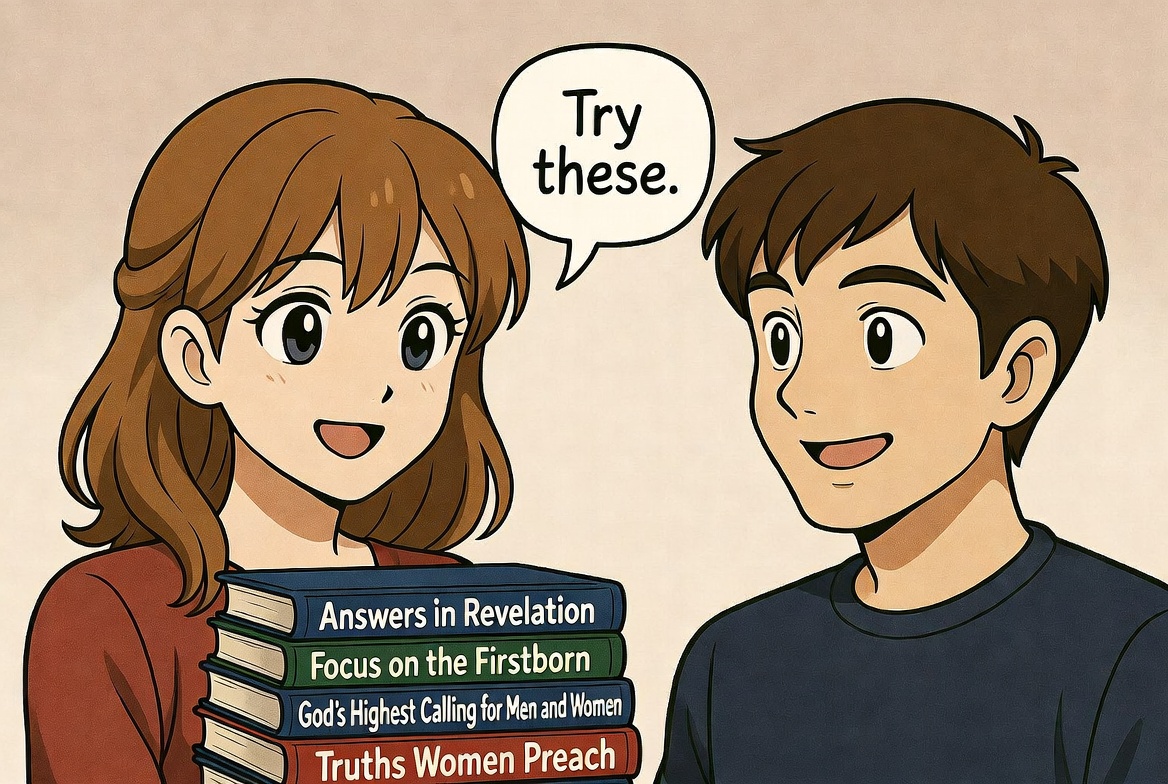
To wrap up the discussion about this first holy cow, I plead with you: mind the resources you use when studying Scripture! There are dedicated scholars doing remarkable research and working hard to provide resources that align with our Pentecostal beliefs and support women in ministry.
If you want to read more theological-type stuff about this topic, check out some of these scholars: Frank Macchia, Wolfgang Vondey, Amos Yong, Kenneth Archer, Craig Keener, and Gordon Fee.


