
My kids love Chic-Fil-A sauce. When they saw I brought a big container home from the store one afternoon, it was like heaven had opened up, and they exclaimed how pleased they were! I’m not exaggerating. They let me know when it’s gone! I’ve started keeping an extra container in our pantry just to keep them happy because, well, I love them.
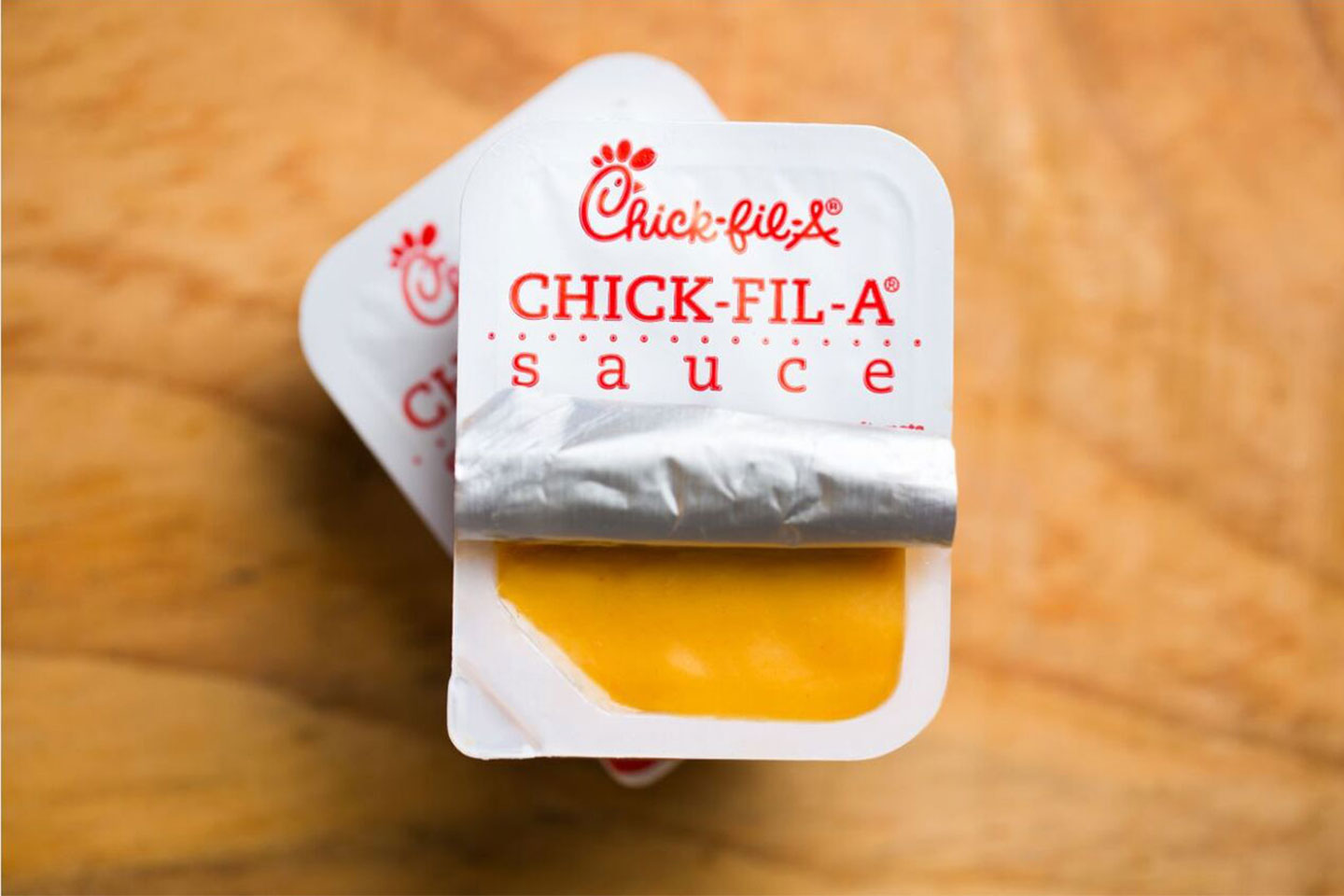
Yesterday, my youngest went downstairs to grab the extra. He’s been working his way around the kitchen lately, reading directions and expiration dates. It’s not been without a few laughs. I love seeing my kids grow in their life skills. And I love not having to cook three meals a day! He had gotten his corndog ready for the microwave and came upstairs smiling with the sauce as I crossed his path, heading into the other room. When I walked back into the kitchen, he had that frustrated look. You know that look. The look they give you when their plans get interrupted, and they’re irritated, and now they have to wait.
I looked around the kitchen, trying to see what was wrong, and attempted to read the situation.
“What’s wrong, Buddy?” I asked.
“I have to wait now,” he said with great frustration. “The instructions said to ‘refrigerate after opening!”
One of the perks of parenting kids, especially those of that age, is helping them understand instructions. I’d taught him to read already, but that wasn’t enough to understand what he needed to do to use that information. Elijah, by nature a pretty good rule follower, had misunderstood the directions by literally taking what he said and applying that information. Before, he’d always gotten the sauce out of the fridge, which was already cold. This was the first time he had to open the container for himself, and he wanted to do it right!
“Bub, those directions mean that it can be unrefrigerated until you open it to use it. Then, you shouldn’t put it back on the shelf after you use it. You can use it now, but it gets stored in the refrigerator afterward, so it doesn’t go bad.”
I watched as understanding chased his frustration away. He was still pretty flustered with himself, but now he didn’t have to wait!
“Oh! I get it now. I can’t believe I didn’t get that before!” he said, quickly returning to the fridge to grab the beloved sauce for his corn dog.
I smiled and thought, “How often are we the same way?” Then, last night, he saw his big sister come to the couch with a mug of hot chocolate.
How they want hot chocolate when it’s 900 degrees out is beyond me, I think as I sip my morning coffee.
“Mom, can I have some, too!?”
Gosh, I love this kid. It doesn’t matter how often I tell him that if his sister comes in with a snack, I won’t tell him he can’t have the same! About a minute later, I hear him in the kitchen proclaiming,
“Mom, the milk is bad! We need more milk!”
I had just had a bowl of cereal for lunch earlier, and it was fine. Milk goes pretty fast around here, too. (Don’t judge our summer eating habits; days like today are what psychologists call “self-care!)
Even though Lydia had just come in with a cup of hot chocolate made with milk, Elijah couldn’t get past that expiration/sell-by date. It was something like yesterday or the day before, but it was still good, and I knew it.
“Bubby, I just had some earlier today. It’s still good!”
“I’ll make mine with water. I don’t want to get sick!”
You really have to hand it to the kid—he’s really exercising some critical thinking skills in there! It wasn’t worth getting off the couch about. We were waiting on him to get back to finish watching the Chosen series we’d just started. He came back in the living room with a yummy hot chocolate made with water, cool whip, and a maraschino cherry on top. (We’re fancy around here.)
What does all this matter? Why am I blogging about my adorable kid learning his way around the kitchen? What’s the point? I’m so glad you asked.
When we begin learning how to read the Bible, we often make the same mistakes and judgements as kids learning their way around the kitchen. That’s why learning how to read the context is so important.
Context is more than just a few verses before and after the passage you’re trying to understand. Right now, Elijah is learning the basics of food safety, but with my guidance, he’s learning how to apply knowledge and understanding to the literal words/directions on the label. In like manner, the Holy Spirit is available to guide those in Christ through the Scripture in wisdom. Oh, how I love the Holy Spirit! 2 Peter 1:3-8 describes a wonderful process for those in Christ to dig their heels in and do their part to work out their own salvation. Christ has done the work for us, and the Holy Spirit empowers us to walk the walk and do our part. We can’t do God’s part, and he won’t do ours. But he does guide us just as I helped Elijah understand in the kitchen. Let’s read the verse together:
I can pray this because his divine power has bestowed on us everything necessary for life and godliness through the rich knowledge of the one who called us by his own glory and excellence. Through these things he has bestowed on us his precious and most magnificent promises, so that by means of what was promised you may become partakers of the divine nature, after escaping the worldly corruption that is produced by evil desire. For this very reason, make every effort to add to your faith excellence, to excellence, knowledge; to knowledge, self-control; to self-control, perseverance; to perseverance, godliness; to godliness, brotherly affection; to brotherly affection, unselfish love. For if these things are really yours and are continually increasing, they will keep you from becoming ineffective and unproductive in your pursuit of knowing our Lord Jesus Christ more intimately. 2 Peter 1:3-8 NET
We read that God has promised that we “may become partakers of the divine nature.” We are like kids in a well-stocked kitchen looking for ingredients for a recipe we’ve never made! We derive nourishment from the substance of the Holy Spirit. Breathed-upon Scripturefood to eat in the following passages:
Jesus replied, “Everyone who drinks some of this water will be thirsty again. But whoever drinks some of the water that I will give him will never be thirsty again, but the water that I will give him will become in him a fountain of water springing up to eternal life.” The woman said to him, “Sir, give me this water, so that I will not be thirsty or have to come here to draw water.” John 4: 13-15 NET
Meanwhile the disciples were urging him, “Rabbi, eat something.” But he said to them, “I have food to eat that you know nothing about.” So the disciples began to say to one another, “No one brought him anything to eat, did they?” Jesus said to them, “My food is to do the will of the one who sent me and to complete his work. John 4: 31-34 NET
Webster’s defines context simply as “the parts of a discourse that surround a word or passage and can throw light on its meaning and as the the interrelated conditions in which something exists or occurs” (Merriam-Webster, n.d.). When we study Scripture, however, it is essential to look at context through a few different lenses. Jeremy Bouma writes for Zondervan Academic and, in his online article, “How to Read the Bible in Context,” lists three different types of context to consider when studying the Bible: historical, cultural, and literary. You can click on the link to learn more about those.
I point this out in today’s blog because I was struck by how simple the words “refrigerate after opening” and “expiration date” seem. The products were good and labeled, but context was still needed before he could partake in their goodness. It’s not so much that we miss out on special sauces and milk that troubles me. It’s the lack of understanding when we are scrounging for food in God’s kitchen without knowing His heart.
Let me break it down this way: Elijah knew everything in that kitchen was there because I put it there. I had purposefully gone to the store, picked out the products, brought them home, and put them within his reach. The Scriptures are the verbally inspired of God and revelation of God to man, the infallible, authoritative rule of God to man in faith and conduct. As children of God, we can walk into his kitchen and find some grub. But we won’t know what to do with the grub to eat it the way it’s supposed to be eaten unless we follow the rules on the packaging and the direction of his Holy Spirit. We may think we need to handle the Scripture one way, when in all reality, it didn’t need to be refrigerated before you used it, just after. We may think one Scripture is expired because of the date when it may still be good for today.
God’s got some good things to whip up for you in his kitchen. If we’re patient enough to let him walk us through a recipe, heed his voice and direction, and rightly handle the Word of God, we can get more from the Bible than just a quick frozen corndog.
I get it—maybe you like corndogs. They’re in my fridge because sometimes we just have to hurry up and eat. I’m ashamed to say how many frozen and ready-to-eat meals my family ate last semester! Haha! But the Lord wants to give you more than that. He is preparing a table before you: fresh vegetables, sweet fruits, perfectly seasoned, juicy steaks, loaded mashed potatoes, yeast rolls… Do you get my gist?
Sometimes, we think we’re settling for a corndog when, in reality, we’re settling for stale saltine crackers and old French fries found under the booster seat of a mom’s car. There’s so much more for you! You can taste and see that the Lord is good!
I’ve put together a list to get you started. I hope this helps you draw near to the Lord. Be blessed in your studies!

Jesus said to them, “I am the bread of life. The one who comes to me will never go hungry, and the one who believes in me will never be thirsty." John 6:35 NET
Dr. Gordon Fee wrote an excellent book called, “How to Read the Bible for All its Worth” I highly recommend. Here, he is in a video talking more about studying the Word. Enjoy!
References
Academic, Z. (2019, June 19). How to Read the Bible in Context. Zondervan Academic. Retrieved June 17, 2022, from https://zondervanacademic.com/blog/bible-context
Biblical Studies Press, LLC. (2017). BibleGateway.com: A searchable online Bible in over 150 versions and 50 languages. Bible Gateway. Retrieved June 17, 2022, from https://www.biblegateway.com/
Fee, G. D., & Stuart, D. (2014). How to Read the Bible for All Its Worth: Fourth Edition (Fourth ed.). Zondervan Academic.
General Presbytery. (2015, August). Assemblies of God (USA) Official Web Site | The Inspiration, Inerrancy, and Authority of Scripture (Official A/G Position Paper). Assemblies of God (USA). Retrieved June 17, 2022, from https://ag.org/Beliefs/Position-Papers/Inspiration-Inerrancy-Authority-of-Scripture
Merriam-Webster. (n.d.). Context. In Merriam-Webster.com dictionary. Retrieved June 17, 2022, from https://www.merriam-webster.com/dictionary/context

 Write Now!