
I visited the Orofacial Pain Clinic at the University of Kentucky last Thursday and finally got to see doctors specializing in TMJ/TMD. I’m excited to share some insights I’ve gained. Sometimes, I experience intense pain in my jaw, neck, and entire face that accompanies my headaches. There are moments when my jaw locks up. I’ve always thought it was linked to my dental issues. (I have plenty of those!) However, it turns out that my missing back teeth aren’t the primary cause of my pain; instead, it’s due to hypermobility in my jaw. It’s probably not surprising to most of you that my big, overactive mouth is involved. Selah.
Pain has not been a stranger to me over the past several years. It’s shown itself in various ways: herniated discs, endometriosis, TMJ, cervicogenic headaches, anxiety, depression, high blood pressure, and a bit of arthritis here and there, as well as spinal stenosis and degenerative disc disease. In other words, I’m getting older!
In summary, my orofacial pain results from two separate issues related to the hypermobility of my jaw concerning the TMJ joint and the disc it rotates on. Although I still need to address my dental issues, fixing them now would only worsen my pain. I hesitate to admit that I sometimes use a back massager on my face to reposition my jaw; it feels like I’m bringing a bull into a china shop to redecorate. I have to be cautious because if I leave it on too long, it could bruise my face. I was surprised to hear the doctors say that using the back massager was a good idea. I’m grateful that my fear of judgment didn’t prevent me from seeking an unconventional yet practical solution to help during painful flare-ups!
Moving forward, I need to be mindful of keeping my jaw relaxed. I’m learning to manage pain by eating softer foods, taking smaller bites, and maintaining good posture. I’ll also continue with pain management treatments. If necessary, down the line, there are procedures I can consider. Oh, and one more thing: I need to avoid keeping my mouth open for extended periods. When I heard that, tears began to well up in my eyes.
I quietly managed to choke out the words, “I sing.” I thought I was overreacting, but the doctors validated my feelings and reassured me I wasn’t. Singing has become painful, and my ears are sensitive to sound, especially during worship. I get so overstimulated that it feels like my brain shuts down, making it hard to focus or participate in worship with my brothers and sisters. I understand it doesn’t mean I can never sing again; I just need to wait until the pain subsides. As it stands, I’ll have to manage this pain for the rest of my life (unless God heals it, of course).
On our way home, I tuned into my eschatology class, grateful for the distraction from my thoughts. However, I want to share that I have an unexplainable peace. I’ve experienced this kind of peace before—the kind that accompanies pain, opens my heart and eyes, and helps me see my world more clearly. I began to piece together the bits of encouragement I received from the Holy Spirit that night and recognized connections to valuable life lessons for anyone seeking wisdom.
God often captures my attention by surprising or offending me, which is what happened when I heard a certain song rising in my heart. I’ve never cared for it, mind you. But this time, God’s Spirit was in it. (My friend Shawn will find this amusing, as it’s one of his favorites, and he knows I’ve never liked it.) The lyrics say:
“If I had no voice, if I had no tongue, I would dance for you like the rising sun, and when that day comes and I see your face, I will shout your endless glorious praise.”
Why did that song irritate me so much? Because I would think, “So, what’s stopping you from dancing now? Why wait until you lose your voice?” (Insert the Napoleon Dynamite expression here: “GOSH!”)
Here’s the deal: in my own strength, I don’t even have a hallelujah. Even if the gifts I’ve been given are taken away, I will find a way to bless the Lord. I admit, for a moment, I felt guilty for being so annoyed with the song. But I don’t feel guilty for being annoyed with songs that teach lousy theology. I’m still a work in progress, so we’ll see how it goes!
When we trust the Lord, He empowers us to be compassionate and show mercy to those around us—even toward those experiencing situations we may never fully understand. It’s easy to forget God’s truth when pain limits our perception. I felt a declaration rise in my spirit, as if speaking to my pain. It feels as if my body is groaning for the resurrection yet to come. Pain can remind me of the deliverance still to come, and I hold onto hope. It’s as if Scripture is carved on my heart, rising to my mind; I recognize that if I yield to God’s greater work, this momentary light affliction can work in me an eternal weight of glory.
Without further ado, here’s my list:
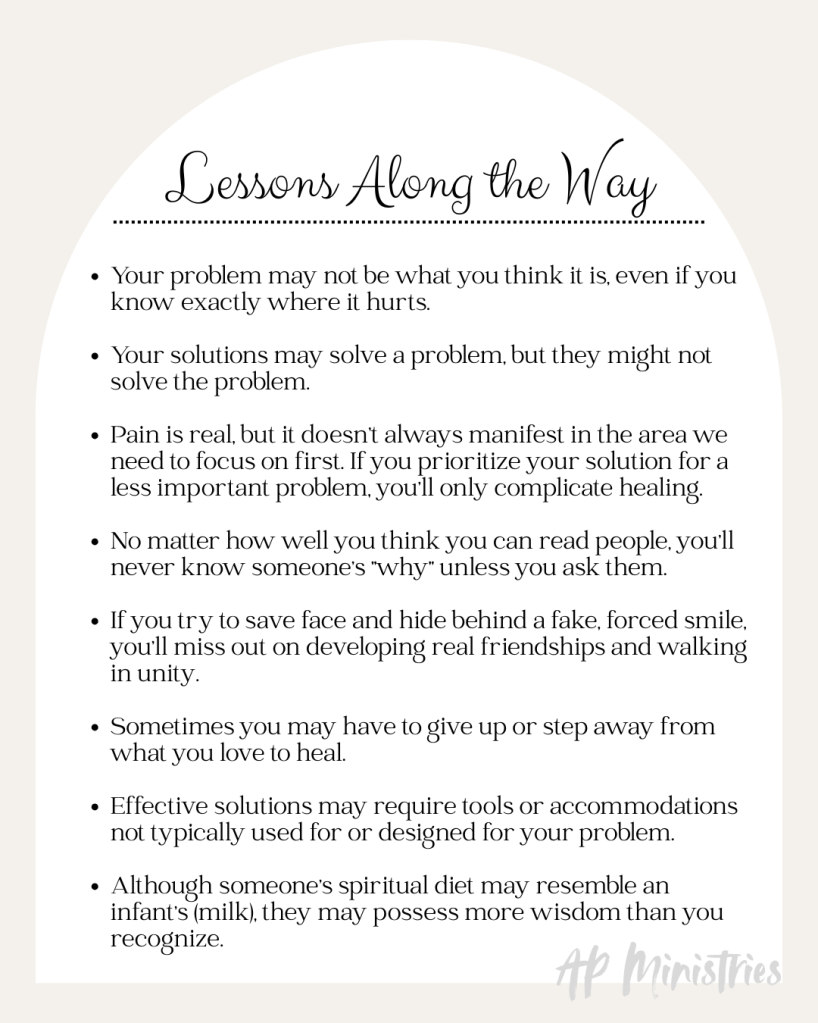
Allow me to explain:
- Your problem may not be what you think it is, even if you know exactly where it hurts. I thought that the bone loss in my jaw was my biggest concern. The local periodontist informed me that extensive bone and tissue grafting would cost over $35,000. However, this solution would only have a 60% chance of being strong enough to support dental implants, which would complicate, rather than alleviate, my pain.
- Your solutions may solve a problem, but they might not solve the problem. I am thankful that my attending doctor specializes in periodontics. If I had rushed into extensive treatment without addressing my jaw issue first, my pain could have gotten much worse. How often do we convince ourselves that we are right instead of seeking advice from others? Others possess perspectives that we might lack. We need people from diverse backgrounds and experiences in our lives.
- Pain is real, but it doesn’t always manifest in the area we need to focus on first. I’ve been shot with steroids in more places than I can list. It can be difficult to track down the root of our pain. Our bodies are weird, though. Pain can be referred to unexpected places that can confuse us. We can’t always chase pain to find where we need help. Doctors listen (well, the good ones do) and rely on scans that see what we can’t. It’s critical we seek the guidance of the Holy Spirit, who does just that.
- No matter how well you think you can read people, you’ll never know someone’s “why” unless you ask them. It’s no secret that my facial expressions and tone don’t always align with others’ expectations. As a result, I feel like my motives are often misjudged. The truth is, I have a growing concern that I will be even more misunderstood and dismissed than I already am now that I am making a conscious effort to keep my face relaxed. I want to believe that people will ask me about my motives if they ever question them, but it’s not easy to trust that they will. I don’t typically shy away from confronting problems; I address issues that matter to me and express my concerns. It’s not that I enjoy confrontation, but I recognize the value on the other side! Strangely, this is often perceived as harsh rather than an expression of vulnerability. I don’t know if I will ever understand why.
- I hope that someday we can move past rigid social norms in the church and embrace each other’s authenticity in unity. If we want others to know us, we must put aside our fear of being judged. We will need to invest our time to both know and be known, which will cost us. Additionally, we have to trust that if people question our motives, they will come to us about it. Chasing down every dog that barks would not only be exhausting, but it would distract us from fulfilling the Great Commission. Even though everyone is wired differently, we tend to surround ourselves with those who make us comfortable and distance ourselves from those who don’t.
- If you try to save face and hide behind a fake, forced smile, you’ll miss out on developing real friendships and walking in unity. My closest friends don’t expect me to “mask” my natural disposition. My healing process won’t necessarily look like someone else’s; it’s unique. The same can be said of our worship. Worship leaders can identify with this struggle because it’s easier to find more expressive people encouraging. We can’t forget that we look at outward appearances, God looks at the heart. No matter how good we think we may be at reading people and judging motives, we will inevitably fall short. My anxiousness just thinking about being tempted to put on a happy face is helping me to remember how important it is to meet people where they are and let God be God. He’s better at it than I am anyway.
- Sometimes you may have to give up or step away from what you love to heal. We don’t always recognize when we become too wrapped up in ourselves while serving. This shift can turn our service into a performance focused on the nature or tone of our harmonic hallelujahs, rather than on the One we’re praising. We need to trust that God has a plan and purpose in mind when the things we love must be limited or surrendered. Looking back, I can see the Lord’s hand guiding me away from music and directing my attention toward theology and writing. I am grateful that this transition didn’t need to be so drastic; instead, God instilled in me a new passion that I truly love.
- Effective solutions may require tools or accommodations not typically used for or designed for your problem. Effective solutions may require unconventional tools or accommodations designed for various purposes. How I discovered that a gigantic back massager would alleviate the pain in my face is beyond me. It looks absurd, and I can only imagine what others, who have never experienced orofacial pain, might think. If I’m not careful, I could leave bruises on my face, so I must proceed carefully. Imagine how discouraged I might feel if someone said something that caused me to second-guess my actions? (Selah, ministers!)
- Although someone’s spiritual diet may resemble an infant’s (milk), they may possess more wisdom than you recognize. When we compare this to how we discuss “milk” and “meat” in contemporary church settings, we should remember that there’s a time for everything, and rest is a critical component of the healing process. What someone is currently “chewing” on doesn’t always indicate their wisdom or maturity.
Lastly, even if someone’s spiritual diet resembles that of an infant (milk), they may possess more wisdom than we give them credit for. I love bacon, ribeyes, and corn on the cob, but I’m learning there’s also a time for softer foods that are not solely dependent on our digestive system. So don’t be too quick to judge others for what they’re “eating. ”
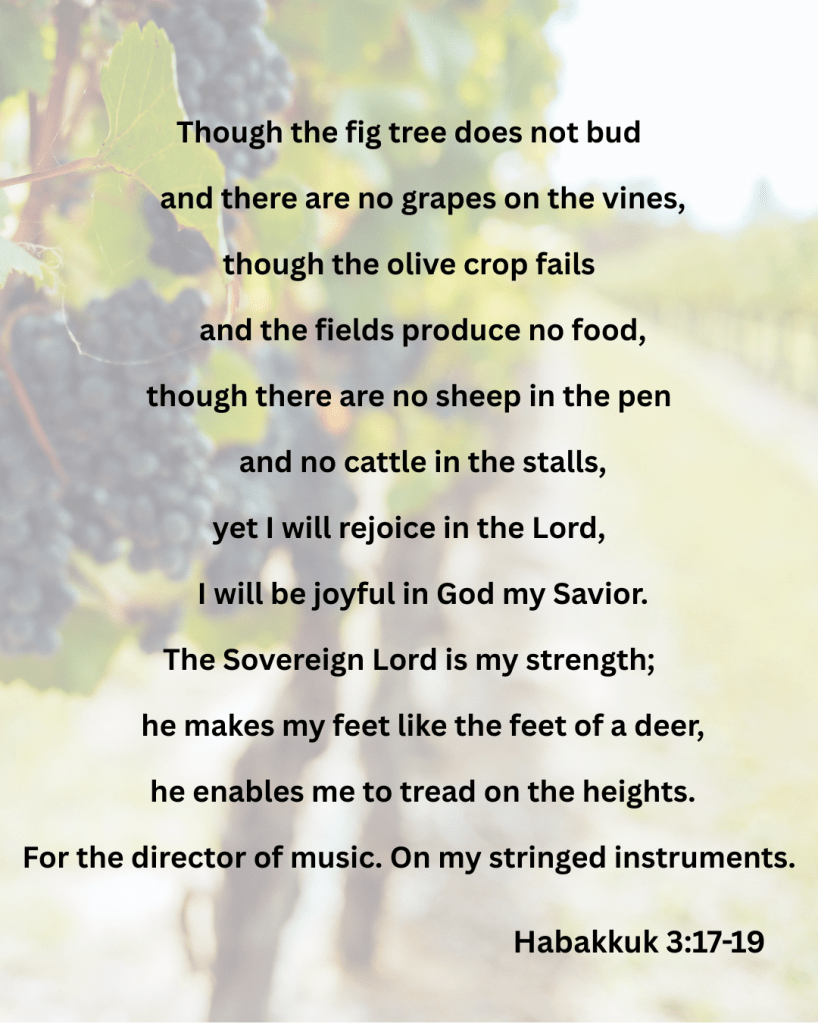
Let me leave you with this bit of encouragement from one of my favorite verses-
Habakkuk 3:17-19 reads:
Habakkuk 3:17-19

 Write Now!